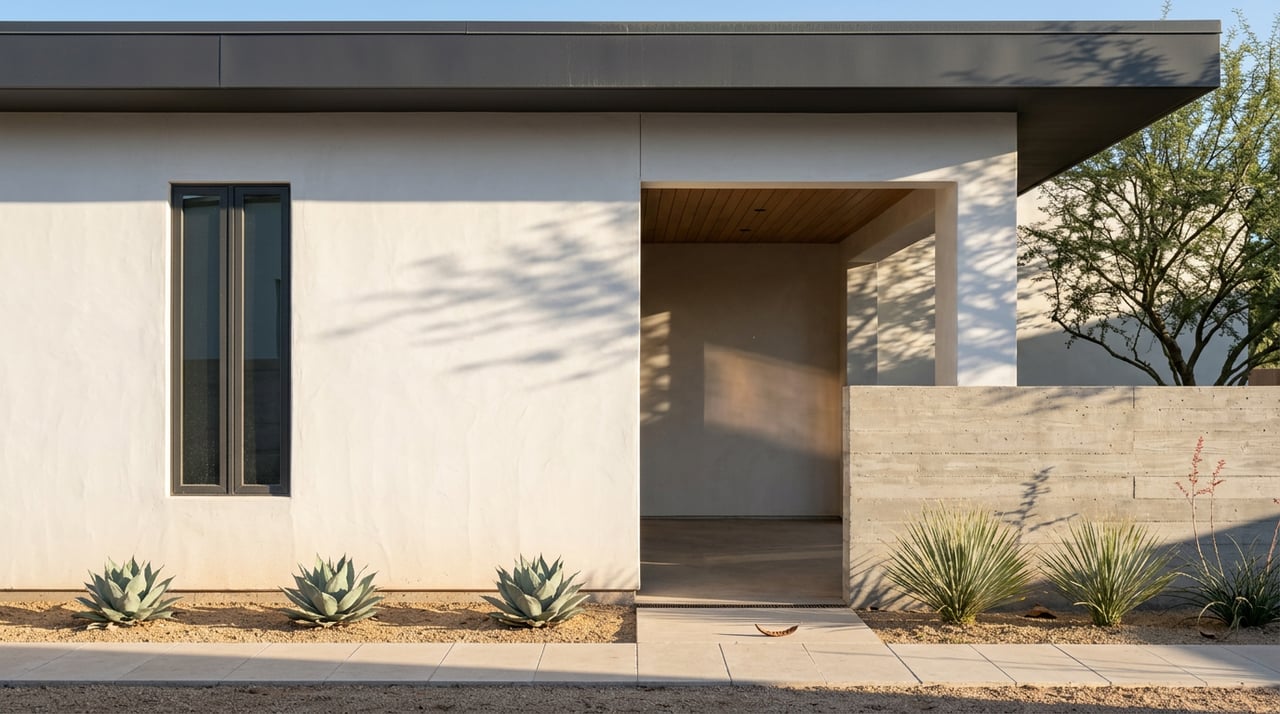
The Two Duna La Quintas: What the Median Hides About On-Fairway Condos, Detached Homes, and the Resort Next Door
August 6, 2026
August 6, 2026
Portal medians treat Duna La Quinta as one community. It isn't. Behind the guard gate at Avenida Los Verdes and Avenue 50 sit two housing stocks built more than a decade apart, sharing a name, a golf course view, and almost nothing else about how they trade, what they cost to own, or what a buyer is actually acquiring.
That distinction is the whole game. Read the median as a single number and Duna looks like a mid-market resort community. Read it as a blended average of two assets and the buying decision becomes a three-part choice: which vintage of home, which tier of access to the La Quinta Resort next door, and which side of a utility boundary that runs directly under Washington Street.
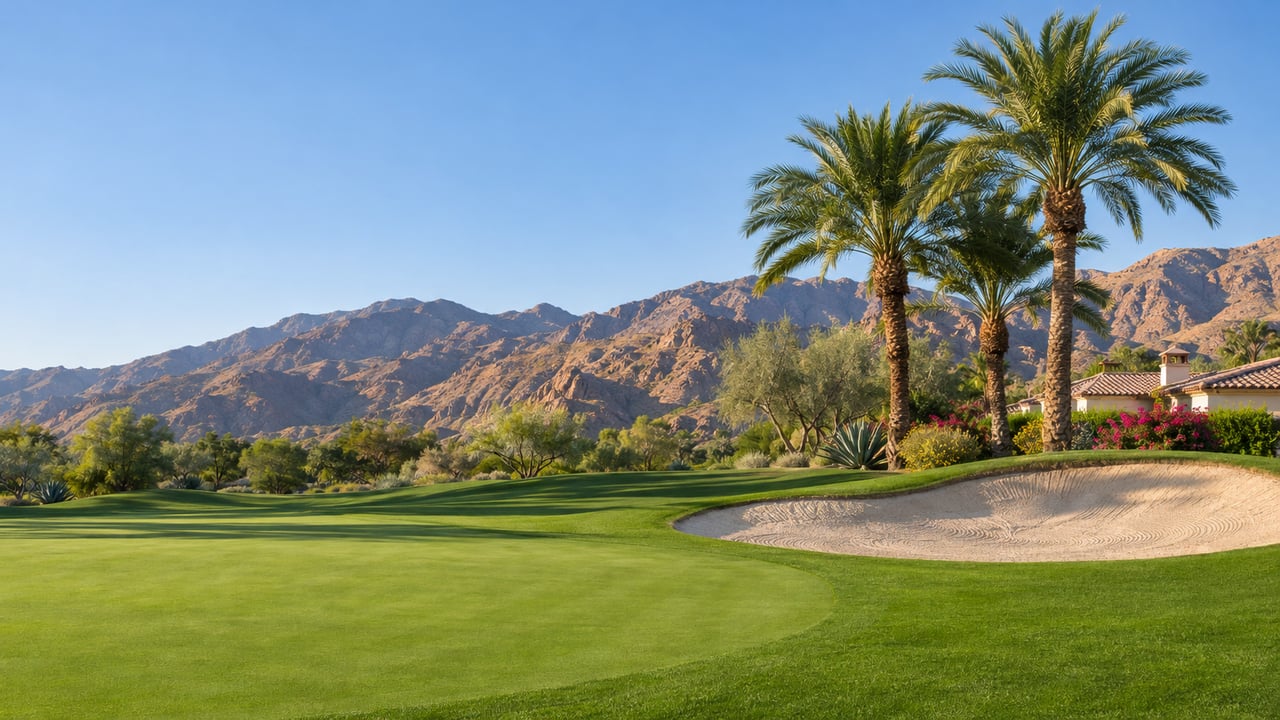
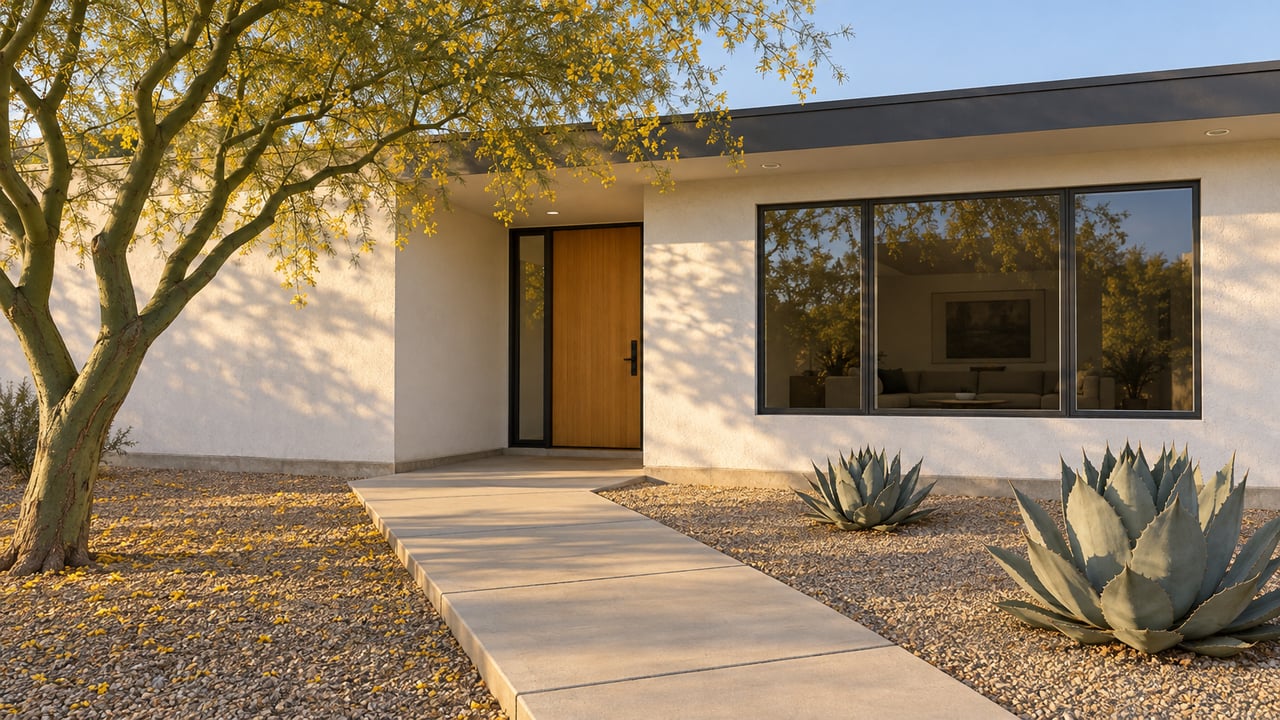
The condos were built in 1984 and 1985. The detached single-family homes came a decade later, most between 1995 and 2002. They share community pools, tennis, walking paths, and the same panoramic sightlines toward the Santa Rosa Mountains and the Dunes fairways. Beyond that, they are different products serving different buyers.
| Attribute | Condos (1984–1985) | Detached Homes (1995–2002) |
|---|---|---|
| Typical size | ~1,538 to 2,613 sq ft | ~1,830 to 3,152 sq ft |
| Bedrooms | 2 to 3 | 2 to 3 |
| Land posture | Attached, shared walls | Fee simple, freestanding |
| HOA scope | Includes trash, basic cable, exterior building maintenance, landscape | Master HOA only; owner carries exterior |
| Recent monthly HOA range reported by community trackers | ~$460 | ~$615 to $674 |
| Renovation posture | Many remodeled to modern finishes; some still original | Newer bones, updates concentrated on kitchens, primary baths |
A remodeled 1985 condo and a 2001 detached home can list within a few hundred thousand of each other. They are not comparables. One is a mid-1980s building envelope with new interiors and a sub-HOA covering the roof over your head. The other is fee-simple land with a late-1990s frame and every exterior dollar on the owner's ledger. Underwriting them the same way is how buyers overpay.
The listing sheets say "playing privileges at La Quinta Resort." That phrase does real work, and most buyers read it wrong.
Duna owners sit across the street from the La Quinta Resort & Club. Access to the Pete Dye Dunes course and the Mountain course is available to them, but access is not membership. The resort offers a tiered structure that owners elect into separately from the home purchase:
The financial gap between those tiers is significant, and it is not a line item you inherit at closing. It is a decision you re-make every year. For a buyer whose spreadsheet quietly assumed "resort access" meant a fixed benefit, that ambiguity is the first friction point. For a buyer who intends to use SilverRock Resort instead, the La Quinta resident card runs $55 per round, which changes the math again.
Duna sits east of Washington Street. That single geographic fact places every home inside the community on Imperial Irrigation District power rather than Southern California Edison. It is one of the sharpest utility-price boundaries in California, and for a desert home with cooling loads that can push 3,000 kWh in a summer month, it is one of the largest recurring cost differences between Duna and otherwise comparable stock in Rancho Mirage or most of Palm Desert.
The gap is meaningful. SCE's average residential rate has sat in the mid-30¢/kWh range through mid-2026. IID, whose board-approved rate schedule stepped base residential energy up to roughly 22¢/kWh in 2026 with another step in 2027, remains well below that even after its first update since 2015. The direction of travel matters as much as the current gap. IID's steps stop after January 2027 and 2028 is flagged as no-change, while SCE's structural pressures from wildfire mitigation and grid hardening continue.
For a Duna buyer, this translates into two things worth pricing before writing an offer. First, cooling costs at any given square footage are materially lower than an SCE-served comparable, which is one reason the community's carry costs pencil more like a lock-and-leave than the size of the homes would suggest. Second, solar economics here are not the same conversation as in Palm Springs. IID never adopted NEM 3.0. It runs Net Billing, where exports credit at a variable rate near 7¢/kWh, so solar sized for export payback is the wrong system. Solar sized for daytime self-consumption, with pool pumps and any EV charging scheduled inside the sun window, is the right one.
One community tracker reports that roughly 46% of Duna sales close furnished. That statistic is doing more work than it looks.
It signals two things about the buyer pool. A meaningful share of the housing stock is used as a second home or seasonal residence, and turnover from those owners tends to trade with contents included because the seller is not moving the furniture into a primary residence somewhere else. It also signals that price-per-square-foot comparisons across recent sales are noisier than they appear. A furnished close carries value that is not in the walls.
A furnished sale is not a discount, and it is not free upside. It is an inventory of personal property crossing the closing table alongside the deed, and it belongs on its own line in the offer.
Two implications follow. Buyers should ask early whether a listing includes furnishings, and if so, ask for the inventory in writing before final price negotiation, not after. Sellers should treat the furnished decision as a marketing choice rather than a default. In a stock where nearly half the market ships furnished, unfurnished can be positioning, and furnished can command a specific buyer who does not want a design project.
The mid-funnel decision to buy in Duna is straightforward. The transaction is where the community's structure shows itself. The items that most commonly catch buyers off guard, in the order they tend to surface:
Before the offer, in this order:
Are Duna La Quinta homes on fee-simple land? The detached single-family homes are on fee-simple land. The condos are attached ownership under a sub-association that maintains the building exteriors and landscape.
Do owners at Duna automatically belong to the La Quinta Resort golf club? No. Owners have access to playing privileges at the resort's Pete Dye Dunes and Mountain courses, and may elect separately into a resort golf membership or a social and fitness membership. The election sits outside the home purchase.
How much does the IID versus SCE boundary actually matter? Enough to model. IID's residential base rate sat near 22¢/kWh in 2026 with a further scheduled step in 2027, while SCE's average residential rate has been in the mid-30¢/kWh range through mid-2026. On a desert cooling load, the annual difference is not trivial.
Is a furnished sale a signal of a weaker market? Not on its own. In resort stock with a high share of seasonal ownership, furnished sales are common and reflect how the homes are used rather than the condition of demand. Read the price per foot after backing out a fair value for contents.
If you are weighing an offer inside Duna La Quinta, or preparing to list one, the difference between an average outcome and a precise one is the work done before the price is set. Robert Andrew Millar & Associates advises buyers and sellers across La Quinta's guard-gated communities with the transactional and legal rigor these decisions deserve. Schedule a confidential consultation to discuss your position.
Stay up to date on the latest real estate trends.
The team is a leader with extensive experience advising executives and other high-profile clients regarding complex legal transactions.